866-453-5366
Mega Rib Panel vs. Standard R-Panel: Which Profile Handles Wide-Span Industrial Roofs Better?
When specifying exposed fastener roofing for wide-bay industrial buildings, the mega rib panel and the standard R-panel are frequently in contention. Both profiles use through-fastener attachment and are widely available, but their structural behavior under long spans is meaningfully different. Understanding these differences helps contractors and spec writers make the right call before steel is ordered. |
What Is a Mega Rib Panel?
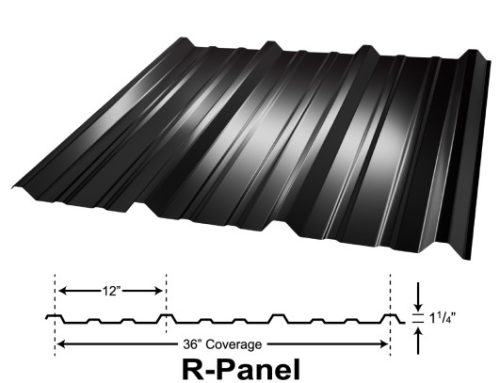
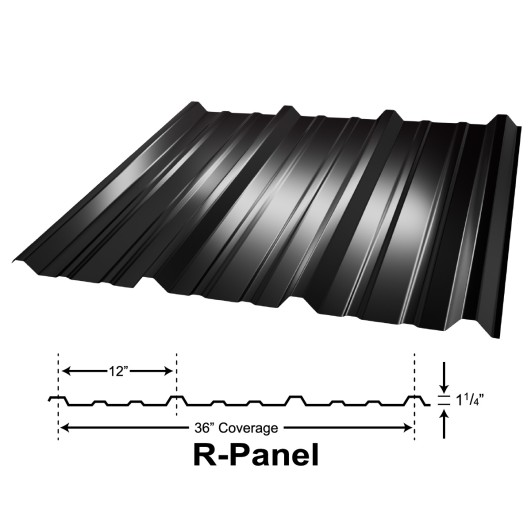
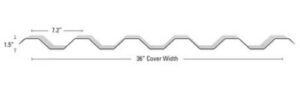
The mega rib panel is a high-rib exposed fastener roof panel with a deeper rib profile than the standard R-panel. Where a typical R-panel features a rib height around 1.25 inches, a mega rib panel commonly reaches 1.5 to 2 inches or more in rib height. This added depth provides greater section modulus, which translates directly to higher spanning capability and better load distribution across wide bays.
Mega rib panels are typically available in 36-inch coverage widths and lengths cut to order. They are manufactured from galvanized or Galvalume steel in gauges ranging from 26 to 22, depending on load requirements. The profile is well suited to distribution centers, aircraft hangars, manufacturing plants, and other applications where bay spacing exceeds 5 feet.
Standard R-Panel: What It Offers and Where It Fits
The R-panel is the most widely used exposed fastener roof and wall panel in North American commercial construction. Its 1.25-inch major rib height provides adequate performance on spans up to approximately 5 feet with standard design loads. For full specifications on the R-panel profile ASC stocks, see the R-Panel product page.

For projects with standard bay spacing of 4 to 5 feet, R-panels perform reliably and represent an efficient use of material. The challenge arises when bay spacing pushes beyond 5 feet, or when significant loads from insulation, mechanical equipment, or snow are involved. In these conditions, R-panels begin to approach their capacity limits, and deflection becomes a concern.
Spanning Capacity: Where the Mega Rib Panel Pulls Ahead
The deeper rib geometry of the mega rib panel gives it a meaningfully higher moment of inertia than a standard R-panel in the same gauge. For a wide-bay warehouse or distribution center with 6-foot purlin spacing, a 26-gauge mega rib panel may carry the design loads comfortably where a 26-gauge R-panel would need to either increase gauge or reduce purlin spacing.
Reducing purlin spacing on a large building has a cascading cost effect. Additional purlins mean additional material, additional labor, and additional connection hardware. In many cases, specifying a mega rib panel to maintain 6-foot spacing is more economical than adding purlins to accommodate a shallower profile.
Side-by-Side Comparison: Mega Rib Panel vs. R-Panel
Rib height: The mega rib panel offers approximately 1.5 to 2 inches versus the R-panel’s 1.25 inches. Spanning capacity: Mega rib typically handles 20 to 30 percent greater spans in the same gauge. Panel weight: Comparable at equivalent gauges, though mega rib may allow stepping down one gauge while maintaining equivalent performance. Availability: R-panels are more universally stocked; mega rib panels may require ordering from specialized suppliers. Cost per square foot: Mega rib typically runs slightly higher per panel but may reduce total system cost through purlin savings.
Installation Considerations for Mega Rib Panels
Mega rib panels use standard exposed fastener installation techniques. Fasteners seat in the flat of the panel between ribs, and lap seams at panel edges require sealant tape in most applications. The deeper rib does affect trim and flashing details at eaves, ridges, and penetrations, so crews should verify that their trim package is designed for the specific panel profile they are installing.
Lap length at end laps should follow manufacturer recommendations, which typically increase for deeper rib profiles. On low-slope applications, proper sealant at end laps is particularly important to prevent water intrusion at the fastener lines.
When the R-Panel Remains the Better Choice
For projects with 4 to 5 foot purlin spacing, standard design loads, and no unusual deflection sensitivity, the R-panel remains an excellent specification. It is slightly lower in material cost for equivalent gauge, benefits from wider crew familiarity, and has an extensive track record in commercial construction. There is no need to specify a mega rib panel where the R-panel performs adequately.
Getting the Right Panel for Your Project
Whether your project calls for a mega rib panel, a standard R-panel, or a combination of both, the full selection is available through ASC’s Exposed Fastener Wall/Roof Panels category. Contact the ASC team directly via the Contact Us page to request side-by-side pricing and availability for your specific project requirements.
Frequently Asked Questions
What makes a mega rib panel different from a standard R-panel?
The mega rib panel has a deeper rib profile, typically 1.5 to 2 inches compared to the R-panel’s 1.25 inches. This provides greater spanning capacity, making it better suited to wide-bay industrial applications.
Can I use a mega rib panel on the same project as R-panels?
Yes. It is common to use a higher-performance panel on wide-bay sections and a standard R-panel on shorter spans within the same project to optimize cost.
Is a mega rib panel more expensive than an R-panel?
Per panel, mega rib typically costs slightly more. However, the reduced number of purlins required on wide-bay buildings can result in a lower overall system cost.
What gauges are mega rib panels available in?
Mega rib panels are commonly available from 26 gauge to 22 gauge. The appropriate gauge depends on span, design load, and applicable code requirements.
Where can I buy mega rib panels at wholesale pricing?
American Structural Co. stocks mega rib panels and standard R-panels for wholesale purchase with nationwide shipping. Contact them for current pricing and availability.
The mega rib panel earns its place on wide-span industrial roofs where the standard R-panel approaches its performance limits. By providing greater spanning capacity in the same gauge, it can reduce purlin requirements and total installed cost on large buildings. For projects with standard bay spacing and moderate loads, the R-panel remains a reliable and cost-effective specification. Matching the panel profile to your actual span and load conditions is the key to an efficient, durable roofing system.